Ball Sort Puz - Color Game
BluetilePuzzle
4.813.47K Reviews
- Version
- 2.8.0
- Installs
- 10.00M
- Age Rating
- Everyone
Screenshots
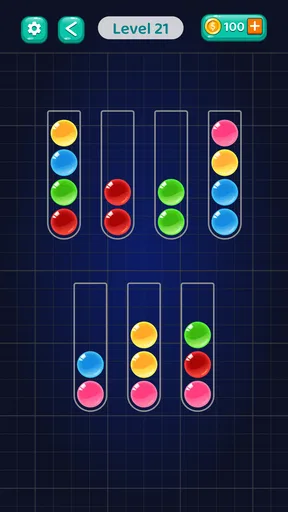
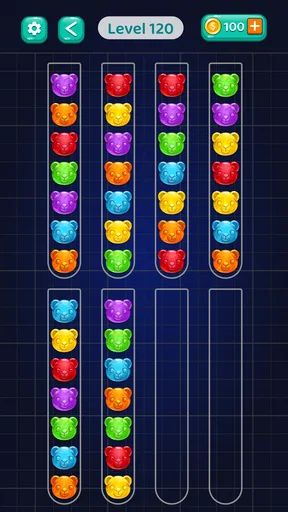
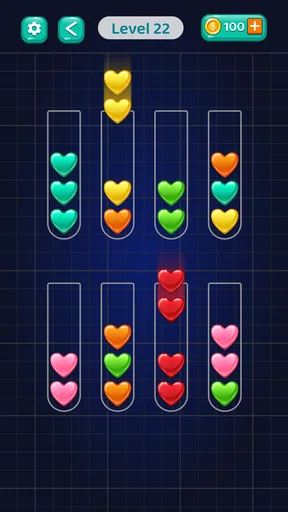
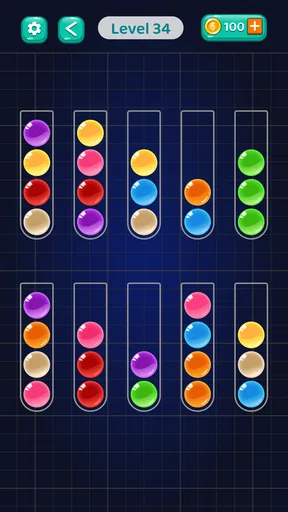
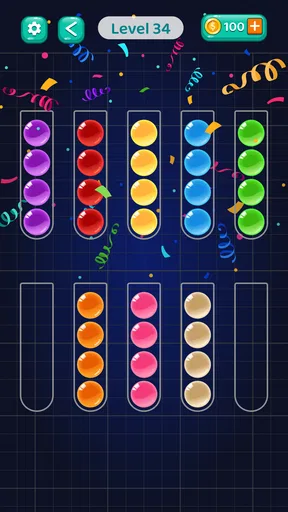


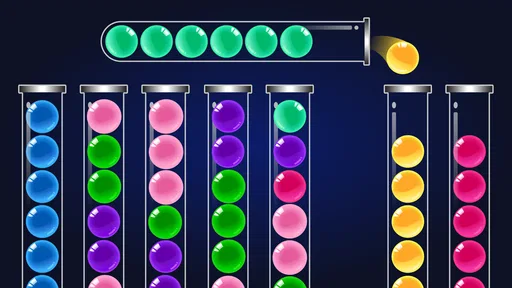
Our Review of Ball Sort Puz - Color Game
 Analysis by Appyee
I spent time with Ball Sort Puz - Color Game as a casual puzzle rather than treating it like a game I needed to master quickly. That distinction matters here. The basic idea is easy to understand: colored balls are arranged in bottles, and I tap to move them until each bottle contains the right color. The rules are familiar within the sorting-puzzle genre, but the appeal comes from how a simple arrangement can turn into a surprisingly careful planning exercise.
This is a free puzzle game from Bluetile, aimed at Everyone, and it runs on Android 7.0 or later. Its store summary presents it as an addictive color-sorting experience, which is a fair description of the first impression, although I think its strongest quality is not speed or spectacle. It is the way the game gives me a small problem that I can understand immediately, then quietly asks me to think several moves ahead.
The game has a 4.8 average from around 542 thousand ratings, with over 10 million installs. Those figures suggest that it has found a broad audience, but popularity alone is not enough reason to keep a puzzle installed. My more useful conclusion is that it works best for people who enjoy short, self-contained logic challenges and do not need a story, character progression, or constant novelty to stay interested.
How the sorting puzzles feel in everyday play
Each puzzle starts with bottles holding mixed colors. My job is to transfer the balls between them, using the available empty space to separate matching colors. A move can look harmless while creating a problem several turns later, so the game rewards patience more than fast tapping. I quickly learned to look at the top ball in each bottle, identify which colors are blocking one another, and reserve open space instead of filling it at the first opportunity.
That last habit is the key to enjoying the game. A spare bottle is not simply somewhere to place a ball; it is working room. If I use it too early, I can leave myself with no way to expose the color I actually need. When I treat the empty bottle as a temporary buffer, the puzzles feel much more manageable. This is one of the useful lessons that the short store description does not communicate: success often depends on protecting flexibility rather than completing a color as soon as possible.
I also found it helpful to plan around groups instead of individual balls. If several balls of one color are buried under different colors, moving the visible blockers first may be more important than moving that target color. This creates a small chain of priorities: expose, consolidate, then use the newly opened space to repeat the process. It is a simple workflow, but it prevents the common mistake of making attractive moves that reduce future options.
The controls are naturally suited to a phone. Tapping a bottle and then another keeps the interaction understandable, and the game does not require a complicated control scheme. That makes it comfortable for a quick session while waiting for a bus, during a short break, or before going to sleep. I would not describe every puzzle as relaxing, though. Once the arrangement becomes crowded, the mental pressure comes from knowing that one careless transfer can make the remaining solution much harder to see.
Why the difficulty can feel fair
The most satisfying moments come when I recognize that a puzzle is not asking for a lucky sequence. It is asking me to preserve options. I can often recover from an imperfect start by using an empty bottle carefully, but recovery becomes less likely when I repeatedly commit colors without checking what remains underneath. That gives the game a fair learning curve at the level of decision-making, even when a particular board makes me feel stuck.
There is also a useful difference between being genuinely blocked and merely failing to notice a route. Before restarting, I now inspect every bottle from the top down and ask which move would reveal the most information. Sometimes the right action is not to place a color beside its match, but to move a temporary blocker into the least restrictive location. This approach saves unnecessary restarts and makes the puzzle feel more like logic than trial and error.
For a realistic everyday example, I can play one puzzle while taking a short coffee break without needing to remember a plot or manage a long session. If I am interrupted, the problem remains self-contained when I return. On the other hand, if I am already mentally tired, the same compact design can become irritating because the game offers little distraction from a mistake. It is best when I want a small reasoning task, not when I want something completely passive.
The game is also a reasonable choice for players who prefer quiet, visual puzzles over word games or timed arcade challenges. Someone who enjoys Sudoku-like deduction may appreciate the need to preserve possibilities, although the mechanics are more spatial and less numerical. People who prefer match-three games with cascades, effects, and rapid rewards may find the deliberate transfers too slow. Likewise, anyone looking for a narrative puzzle adventure will need a different kind of game entirely.
Progress without turning every move into a race
My sense of progress comes mainly from solving boards and becoming more disciplined with space. That is a modest form of progression, but it fits the design. I do not need to learn a large ruleset before I can begin, and the early concept remains visible even as the arrangements demand more planning. The trade-off is that the game can feel repetitive if sorting colored balls is not enough variety for me.
One practical way to keep the experience from becoming frustrating is to separate experimentation from commitment. I first test which top balls can move and which bottles can receive them, then choose a sequence that keeps at least one useful opening available. If I make a move that closes several routes, I treat it as information rather than immediately blaming the puzzle. This mindset makes the game less about guessing the perfect answer on the first attempt.
Pressure can still build when I have invested several moves in a plan and realize that the plan has narrowed the board too much. That is where the casual nature of the game matters. I can step away rather than forcing the solution, then return with a clearer view of the bottle arrangement. A short pause is surprisingly effective because the board is visually simple but easy to over-focus on.
I would not recommend approaching it as a test of speed. The game’s strongest decisions are deliberate, and rushing mainly increases mis-taps and poor planning. If a player wants a score-chasing experience, a timed puzzle game may provide more excitement. If the goal is to occupy a few minutes with a problem that can be solved through observation, this title is better aligned with that use.
What spending changes, and what it does not tell me
Ball Sort Puz - Color Game is free to download, with in-app purchases listed from $0.99 to $21.99 per item. That is the spending context I would want a new player to know before starting. The purchase range shows that optional paid items exist, but it does not by itself explain exactly what each item provides, so I would avoid assuming that spending is necessary for ordinary play or that it changes the puzzle rules.
From a budgeting point of view, I would treat the game as a free trial of the core sorting idea and decide later whether any optional purchase feels worthwhile. I would not buy anything simply because a difficult board made me impatient. A puzzle is most satisfying when I solve it by understanding the arrangement, and paying during a moment of frustration can weaken that satisfaction. If I ever choose to spend, I would first check the item description and the checkout screen carefully rather than treating a purchase as a guaranteed shortcut.
The important fairness question is whether a player can engage with the central puzzle without paying. The listed price and purchase range establish that the game is free with optional purchases, but they do not give me enough detail to make a broader claim about every progression or convenience element. My recommendation is therefore practical: enjoy the free experience first, keep purchase approval under your control, and do not assume that an optional item is required just because a board is challenging.
This approach is different from games where spending is visibly tied to competitive power. Here, the activity itself is sorting, so the fairest way to judge it is whether the puzzle remains a meaningful reasoning task for a non-paying player. I would be cautious about comparing it with premium puzzle games until I know how much of the surrounding experience is affected by optional purchases. A one-time paid alternative may be preferable for someone who wants a clearly defined cost and minimal concern about in-app spending.
Competitive fairness and the limits of comparison
I do not see Ball Sort Puz primarily as a competitive game. Its value is personal problem-solving, not proving that I can outperform another player. That makes fairness feel less like a leaderboard issue and more like a question of whether the puzzle gives me a reasonable chance to think, recover, and learn from mistakes. For this kind of solitary play, a calm pace is more important than a ranking system.
Compared with standard match-three games, the experience is less reactive and less dependent on chains or lucky arrangements. I have more control over each transfer, but that control also makes mistakes feel more directly connected to my planning. Compared with Sudoku, the visual grouping is faster to grasp, yet the available space creates a different kind of constraint. Compared with a premium logic game, this one is easier to start casually, while the free-to-play structure may make the overall experience feel less straightforward for players who dislike optional spending.
That comparison helps identify the right audience. I would choose this game over a timed color puzzle when I want to think at my own pace. I would choose a traditional Sudoku app when I want numbers, notation, and a more formal deduction structure. I would choose a paid puzzle title when I want the clearest possible relationship between payment and content. None of those choices makes Ball Sort Puz - Color Game bad; they simply reflect different expectations.
For families, the Everyone age rating makes the game broadly approachable, and the basic rule is easy to explain. Still, younger players may need help understanding why an empty bottle should sometimes remain empty. That is a useful teaching moment: the best move is not always the move that looks most complete. Adults who want a shared activity can use a board as a small conversation about planning, although the game itself remains a solo puzzle rather than a built-in cooperative experience.
Small techniques that make difficult boards clearer
My first technique is to identify the color with the fewest visible obstacles and use it as an anchor. Completing that group can reduce clutter, but I only do it when the destination bottle will not block a color needed immediately afterward. The second is to avoid filling every available space. An empty bottle is valuable precisely because it allows a temporary move, so using all of the space can be equivalent to removing my own escape route.
The third technique is to think in reversibility. A move that can easily be undone is safer than one that buries a useful ball under several different colors. When I am uncertain, I prefer the action that exposes more of the board while preserving a way back. This is more reliable than trying to predict the entire solution from the opening position.
A fourth useful habit is to pause after a sequence of successful moves. It is tempting to continue automatically once a color starts coming together, but that is when I can overlook a newly exposed blocker. Rechecking the top of every bottle after a major change keeps the next decision based on the current board rather than the plan I had a minute earlier.
These methods do not remove difficulty, and they are not a promise that every board will be solved without a restart. They simply turn frustration into a repeatable process. That is where the game has more depth than its one-line premise suggests: the challenge is not learning many rules, but learning how to manage limited temporary space.
What I would want to know before installing
The game is free, supports devices running Android 7.0 or later, and is currently listed as version 2.8.0. It was released on December 1, 2022, so it is not a brand-new experiment, but it has had time to establish a substantial audience. The developer is Bluetile, and the large install base indicates that finding the game and trying its basic loop should be straightforward on compatible devices.
The main question is not whether the rules are understandable; they are. The more important question is whether I enjoy repeating a focused sorting task. If I like arranging, grouping, and planning around temporary space, the simple presentation works in its favor. If I need changing environments, character goals, or a strong sense of narrative progression, the same simplicity may feel thin after the initial curiosity fades.
I would also decide in advance how I want to handle purchases. Because the game is free but includes individual items priced between $0.99 and $21.99, I would use the platform’s purchase controls and read each item before confirming. That is sensible for any free game, especially when the core activity is easy to access without making spending part of the first session.
There are also practical unknowns I would not fill in with assumptions. The purchase range does not explain every item’s purpose, and the store facts do not establish how each optional element affects play. For that reason, I would judge the game initially on the free puzzle loop, not on an imagined system of rewards or pressure. If the first sessions feel enjoyable without buying anything, that is the clearest sign that the title suits me.
My trust verdict for casual puzzle players
My overall view is positive, with a clear qualification. Ball Sort Puz - Color Game is a focused, accessible sorting puzzle that earns its place on a phone when I want a short logic challenge without a complicated setup. Its best moments come from preserving empty space, exposing blocked colors, and turning a messy bottle arrangement into a sequence of controlled decisions.
I would recommend it to someone who enjoys quiet, repeatable puzzles and is comfortable treating optional purchases cautiously. I would skip it if I wanted a premium game with a fully transparent one-time cost, a story-driven campaign, or fast competitive action. The free entry point is convenient, while the listed in-app purchase range means I would keep spending separate from my judgment of the core gameplay.
After playing, my trust verdict is that the game is worth trying for its central idea, not because its popularity guarantees a perfect experience. The 4.8 average and over 10 million installs show strong interest, but the real test is personal: do I enjoy thinking about bottle space and color order for several minutes at a time? In my case, yes. I especially appreciate that a small visual puzzle can reward careful planning without demanding a long commitment.
My recommendation is simple: install it if you want a free, easy-to-learn color-sorting puzzle, start without spending, and use the empty bottles as carefully as the colored ones. That single habit captures both the game’s charm and its main challenge. It is not the right alternative for every kind of puzzle fan, but for patient players who like solving compact problems at their own pace, Bluetile has built a genuinely enjoyable option.
Verdict
Strengths of Ball Sort Puz - Color Game
- Simple rules make it easy to start playing immediately.
- Short levels fit well into quick breaks or casual sessions.
- Colorful visuals are clear and generally easy to follow.
- Progressive difficulty keeps later puzzles more engaging.
- Offline play makes it convenient when no internet is available.
Limitations of Ball Sort Puz - Color Game
- Some levels may feel repetitive after extended play.
- Hints or undo options may be limited during difficult puzzles.
- Ads can interrupt the flow between levels or attempts.
- Higher stages may depend heavily on trial and error.
- Players seeking action or story may find the gameplay too basic.
Other Releases by Bluetile
View All

Water Sort Puz - Color Game
Puzzle4.8

Dot Link - Connect the Dots
Puzzle4.8

Domino Legends: Classic Game
Board4.7
Similar Picks in This Category
View All
Block Blast!
HungryStudio4.8

Braindom: Brain Games Test
Lahana Game Studio4.6

AMAZE!
CrazyLabs LTD4.6

Sudoku - Classic Sudoku Puzzle
Oakever Games4.7

Art Puzzle - Puzzle Games
Easybrain4.8

Amaze GO!
Oakever Games4.9
Frequently Asked Questions
What is Ball Sort Puz - Color Game?
Ball Sort Puz - Color Game is a casual color-matching puzzle in which you move colored balls between tubes until every tube contains balls of only one color. The rules are simple, but later levels require careful planning because tubes have limited space and an apparently harmless move can block future solutions. It is designed for short, relaxing play sessions on Android and iOS.
How do you play Ball Sort Puz - Color Game?
To play, tap one tube to pick up its top ball and then tap another tube to pour it there. You can generally move a ball only onto an empty tube or onto a ball of the same color, and the destination must have enough room. The objective is to separate all colors into completed tubes. Thinking several moves ahead is more effective than moving balls randomly.
Is Ball Sort Puz - Color Game free to download and play?
The game is typically available as a free download, allowing you to start solving puzzles without purchasing it first. However, free versions may include advertising, optional in-app purchases, or paid features such as removing ads, receiving extra help, or unlocking convenience tools. Before downloading, check the current store listing because pricing, advertisements, and purchase options can vary by platform and region.
Does Ball Sort Puz - Color Game work offline?
Many of the core sorting puzzles can usually be played without a continuous internet connection, which makes the game convenient for travel, commuting, or quick breaks. Nevertheless, an internet connection may be required for advertisements, analytics, cloud features, updates, or in-app purchases. If offline access is important to you, test the game after disabling mobile data and Wi-Fi, since requirements can change between versions.
Is Ball Sort Puz - Color Game suitable for children and casual players?
The basic gameplay is easy to understand and generally suitable for casual players, including children who enjoy logic puzzles. Difficulty increases gradually, so the game can provide a gentle introduction before presenting more demanding layouts. Parents should still review the app’s age rating, advertising, privacy information, and purchase settings, particularly if a child will use the device without supervision.
Play our best games!


